
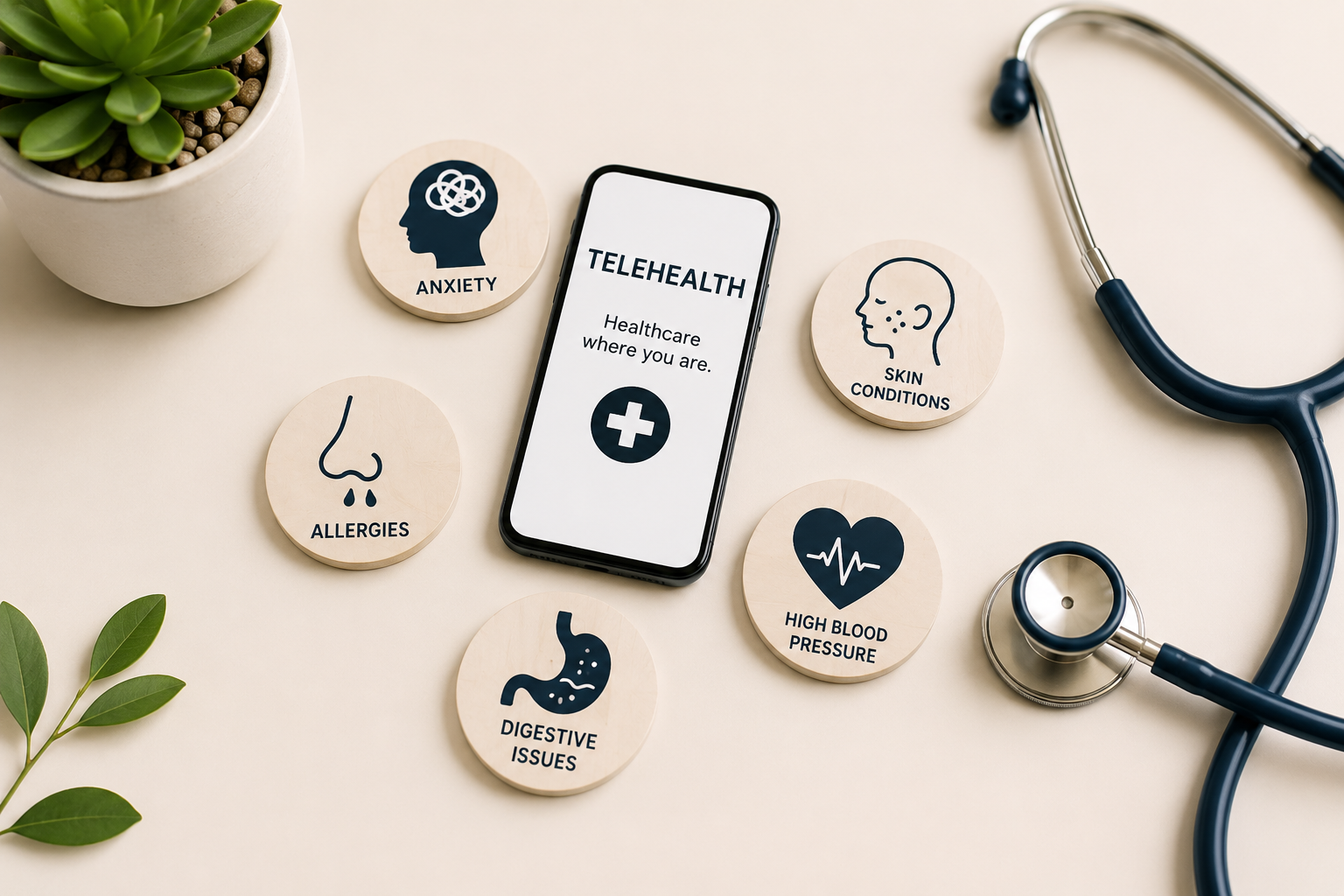
Telehealth has transformed the way many people access healthcare. By allowing patients to consult with healthcare providers remotely, telehealth makes it easier to address a wide range of medical concerns without needing to visit a clinic.
While telehealth cannot replace all forms of medical care, it can be highly effective for many common health issues.
Here are five conditions that are often well-suited for telehealth consultations.
1. Cold and Flu Symptoms
Colds and flu are among the most common reasons people seek medical advice. Telehealth allows patients to discuss symptoms such as fever, cough, sore throat, and congestion with a healthcare provider without leaving home.
A provider can help determine whether your symptoms are consistent with a common viral illness and recommend appropriate treatment options.
In some cases, additional testing or in-person care may be recommended.
2. Allergies
Seasonal allergies can cause symptoms like sneezing, itchy eyes, nasal congestion, and sinus pressure.
Telehealth providers can evaluate these symptoms and recommend treatments such as antihistamines, nasal sprays, or other medications.
For many patients, telehealth offers a convenient way to manage recurring allergy symptoms without scheduling an in-person appointment.
3. Skin Conditions
Many skin issues can be evaluated effectively through telehealth.
Conditions such as:
- Rashes
- Acne
- Minor infections
- Eczema
- Insect bites
can often be assessed visually during a video visit.
Patients may also be able to upload photos in advance to help providers evaluate the condition more accurately.
4. Medication Management
Patients who take long-term medications may need periodic check-ins with their healthcare providers.
This helps ensure that ongoing treatments remain safe and effective; it's especially valuable for men's health treatments, where long-term prescriptions are a common part of ongoing care.
Telehealth appointments can be a convenient way to:
- Review medication effectiveness
- Adjust dosages if needed
- Discuss potential side effects
- Renew prescriptions when appropriate
This helps ensure that ongoing treatments remain safe and effective.
5. Mental Health Consultations
Telehealth has become an especially valuable tool for mental health care.
Many patients, such as those managing women's health needs, simply feel more comfortable discussing sensitive topics like stress, anxiety, depression, or sleep issues from the privacy of their own home.
Virtual appointments with mental health professionals can provide counseling, therapy, and treatment planning in a convenient and accessible way.
When Telehealth May Not Be Appropriate
Although telehealth is useful for many conditions, it is not suitable for emergencies or situations that require immediate physical examination.
If you experience severe symptoms such as chest pain, difficulty breathing, or signs of a medical emergency, you should seek immediate in-person care.
Expanding Access to Care
Telehealth continues to expand access to healthcare by making it easier for patients to connect with providers quickly and conveniently.
For many common medical concerns, a telehealth visit can provide timely guidance and treatment without the need for travel or long wait times.
As healthcare technology continues to evolve, telehealth platforms like NOWMeds will likely play an even greater role in helping people manage their health and well-being.
Start your consultation with NOWMeds today.